Poor water management around retaining walls can saturate the soil, increase pressure behind the structure, and contribute to erosion, cracking, bulging, or movement. Effective retaining wall drainage uses free-draining backfill, filter material, collection pipes, clear outlets, and suitable surface grading to move rainwater and groundwater away safely.
Understanding the warning signs, drainage components, common failure points, and maintenance needs can help homeowners prevent recurring water problems and avoid unnecessary excavation. When pooling, blocked outlets, slow flow, or underground pipe faults are suspected, a CCTV drain inspection can identify silt, roots, blockages, or damaged pipework and help determine the right next step.
Key Takeaways
- Water trapped behind a retaining wall can increase pressure against the structure.
- Free-draining aggregate helps moisture move towards the collection pipe.
- Perforated pipework needs suitable fall and a clear discharge point.
- Silt, roots, poor grading, and blocked stormwater lines can restrict drainage.
- Leaning, major cracking, or sudden movement needs structural assessment as well as drainage investigation.
Why Does Proper Retaining Wall Drainage Matter?
Water needs a reliable route away from retained soil because saturated ground can increase pressure against the wall, soften surrounding soil, and contribute to erosion or pooling.
Proper drainage helps by:
- Reducing hydrostatic pressure. Water can escape instead of building up behind the wall.
- Limiting soil saturation. Better drainage helps prevent the retained soil from staying waterlogged.
- Reducing erosion. Controlled water movement helps protect soil around the wall base.
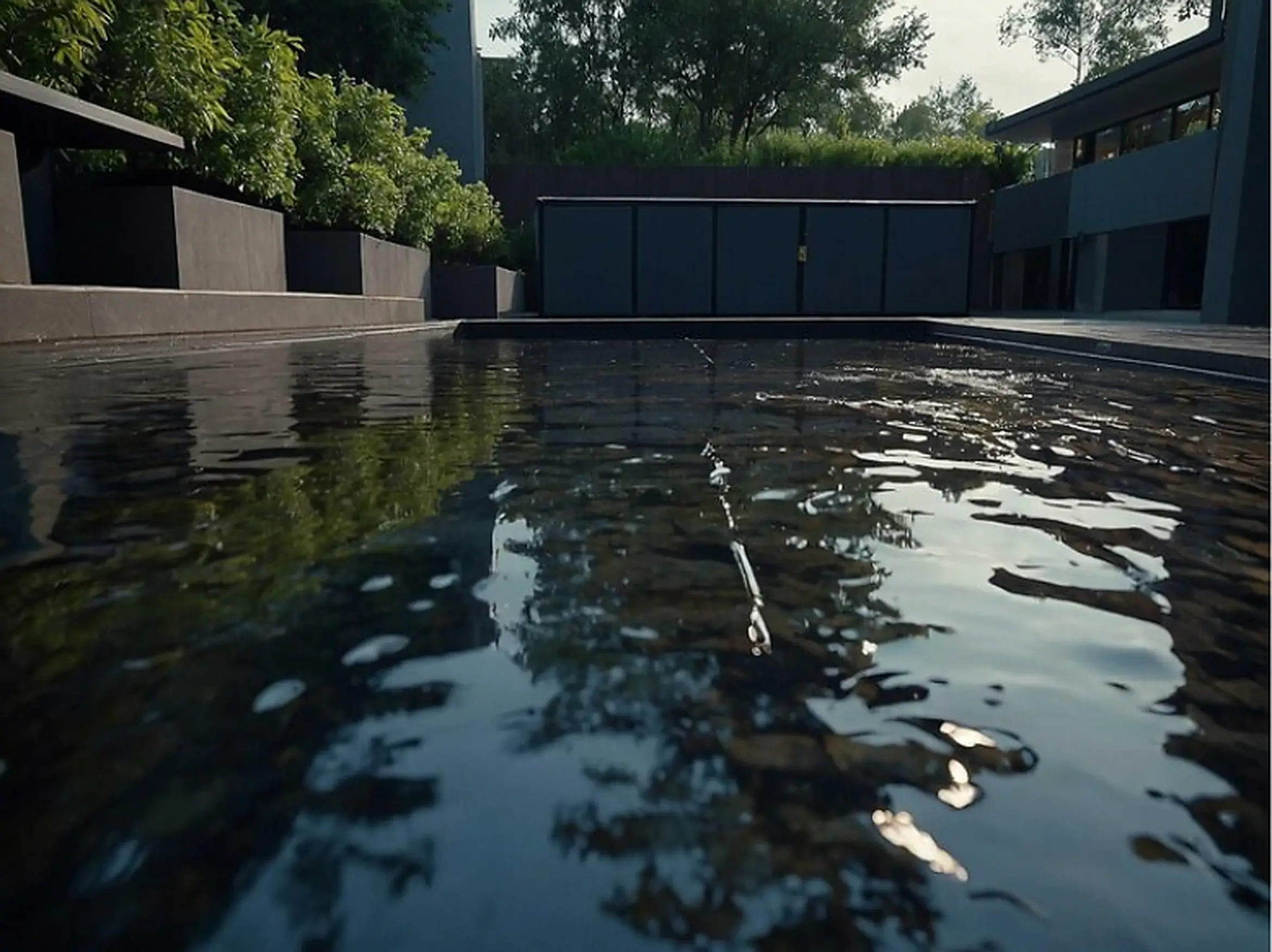
- Preventing surface pooling. Good grading and drainage direct runoff away from the structure.
- Protecting wall stability. Less trapped water reduces one source of pressure that can contribute to movement.
How Do Retaining Wall Drainage Systems Work?
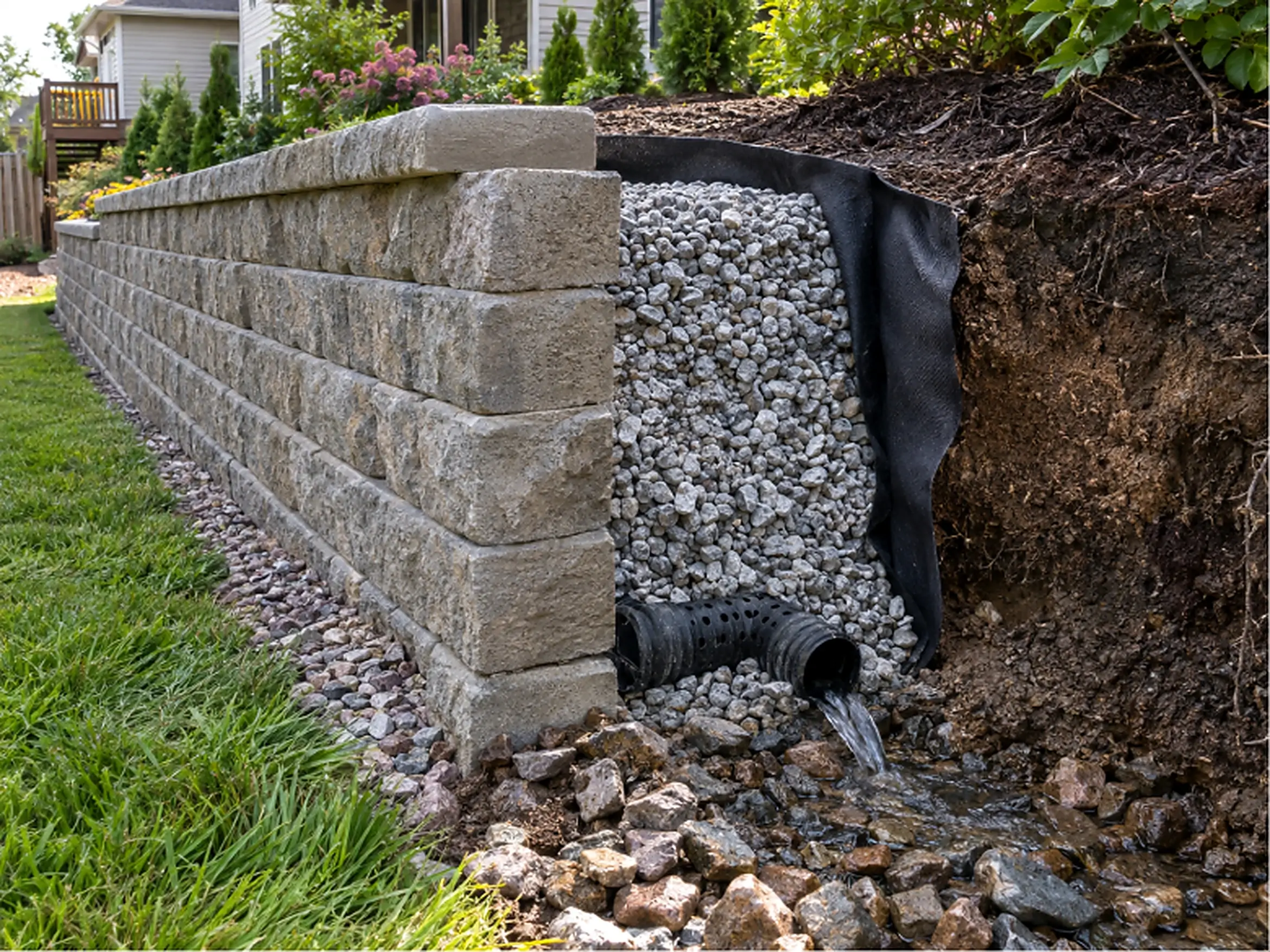
A complete system collects water, filters fine soil, and directs moisture towards a safe discharge point. Aggregate, geotextile, pipework, outlets, and grading work together, so one blocked component can reduce performance.
| Component | Main purpose | Common issue |
| Free draining aggregate | Moves water towards the base | Fine soil fills voids |
| Geotextile fabric | Separates soil from aggregate | Sediment enters drainage layer |
| Perforated pipe | Collects water near the base | Silt, roots, or poor fall restrict flow |
| Weep holes | Release trapped water | Soil or debris blocks openings |
| Outlet | Carries water away | Downstream drainage is restricted |
| Surface grading | Directs runoff away | Water flows towards the wall |
Drainage Behind Retaining Wall Sections
Free-draining material, filtration, and a clear outlet work together to move moisture away from retained soil. Gravel alone may not perform well if fine soil enters the voids or the discharge point becomes blocked.
Retaining Wall Drainage Pipe
Pipework is generally positioned near the base so collected water can travel towards an outlet. Suitable fall, aggregate, filtration, and a clear outlet are needed for reliable flow.
Block Retaining Wall Drainage
Block walls also need a planned path for water to escape. Wall height, soil type, slope, paving, irrigation, backfill, and nearby stormwater infrastructure all influence how much water reaches the structure.
What Are the Warning Signs of Poor Drainage?
Moisture and soil changes often appear before serious wall movement becomes obvious. Pooling, staining, erosion, blocked outlets, and saturated ground can all indicate that water is not leaving the area efficiently.
Check for:
- Water collecting above or below the wall
- Soil remaining wet long after rain
- Mud or sediment washing through joints
- Blocked weep holes or outlets
- Algae or persistent staining
- Erosion around the wall base
- Nearby stormwater grates overflowing
- New cracks, bulging, or leaning
Persistent wetness during dry weather can indicate irrigation problems, leaks, or groundwater.
How Do You Check the Drainage Step by Step?
A safe inspection should begin with visible runoff and accessible outlets before digging. Excavation behind a leaning or unstable wall can disturb supporting soil and should not begin without suitable assessment.
- Observe where surface water travels during rainfall.
- Locate pooling above, beside, and below the wall.
- Inspect visible outlets for sediment, roots, mulch, or debris.
- Check accessible weep holes for blockages.
- Watch nearby stormwater grates for slow flow or overflow.
- Check irrigation for leaks or excessive watering.
- Compare wet and dry conditions for persistent moisture.
- Arrange underground inspection when the pipe route remains unclear.
Avoid Excavating Around an Unstable Wall
Major cracking, bulging, leaning, or sudden movement can indicate more than a drainage blockage. A retaining wall or structural specialist should assess stability, while a drainage specialist investigates water flow and underground pipe problems.
How Do You Choose Drainage for Retaining Wall Projects?
Site conditions determine the right approach. Soil type, wall height, slope, irrigation, runoff, and discharge points should be considered together.
Important considerations include:
- Free-draining material behind the wall
- Separation between soil and drainage aggregate
- Collection pipe size and location
- Pipe fall towards the outlet
- Accessible discharge points
- Surface grading above the wall
- Runoff from roofs and paving
- Future access for cleaning or repairs
Existing walls need extra care because the original layout may be unknown or damaged.
Can a Blocked Stormwater Drain Affect the Wall?
A restricted downstream stormwater line can cause pooling when wall drainage connects to or discharges near that system. Water may remain behind the wall if the receiving line contains roots, silt, debris, or structural damage.
Recurring overflow may need a blocked stormwater drain service rather than repeated surface cleaning. Attempts at unblocking a stormwater drain should avoid pushing debris deeper into the line.
When CCTV Inspection Helps
Camera inspection can help when an underground outlet repeatedly backs up or stays slow after visible debris has been removed. CCTV footage can locate silt, roots, displaced joints, cracks, or collapsed sections and show whether clearing or repair is more suitable.
When High Pressure Jetting May Be Suitable
Silt, debris, and suitable root material may be removed with high-pressure drain jetting when pipe condition allows it. The line should be checked afterwards to confirm water can reach the intended discharge point.
How Can You Prevent Drainage Problems?
Routine maintenance keeps visible outlets open and limits unnecessary water around the wall. Landscaping, paving, irrigation, or soil changes can alter runoff even when the original system worked properly.
Useful maintenance includes:
- Keep weep holes and outlets clear of mulch and soil.
- Prevent garden beds from covering discharge points.
- Check irrigation for leaks and overspray.
- Keep nearby stormwater grates free from leaves.
- Watch for pooling after landscaping or paving changes.
- Investigate recurring overflow instead of clearing only the surface.
Safe methods for clearing blocked drains can help with accessibility restrictions. Persistent gurgling drains may signal a deeper restriction.
When Should You Arrange a Drainage Inspection?
Recurring pooling, overflowing outlets, repeated blockages, or an unclear discharge route justify investigation. Early diagnosis can separate debris from damaged pipework before excavation.
Arrange an inspection when:
- Water remains behind the wall after ordinary rainfall.
- Visible outlets stop flowing.
- Nearby stormwater grates repeatedly overflow.
- The same blockage returns after clearing.
- Roots or heavy sediment are suspected.
- Unexpected wet patches appear near buried drainage.
Major wall movement or instability should also receive structural assessment.
Keep Water Away From the Wall
Reliable retaining wall drainage controls where water travels instead of allowing saturated soil to remain against the structure. Effective water management combines surface grading, free-draining material, filtration, collection pipework, and a clear discharge route.
Brisbane Blocked Drain Experts can investigate accessible underground drainage and stormwater problems across Brisbane. Call 07 3333 2734 or email info@brisbaneblockeddrainexperts.com.au when recurring pooling, blocked outlets, or suspected pipe damage needs assessment.